You thought BV was something you left behind in your thirties. Then perimenopause arrives, and suddenly the thin discharge, the fishy odour, and the discomfort are back. If that sounds familiar, you are not imagining things, and it is not a hygiene problem.
BV and menopause are closely linked, and the reason comes down to one hormone: oestrogen. This guide explains why bacterial vaginosis after menopause is so common, what changes inside your vaginal flora, and how daily probiotic support fits into a plan that works.
What Is BV, and Why Does Menopause Raise the Risk?
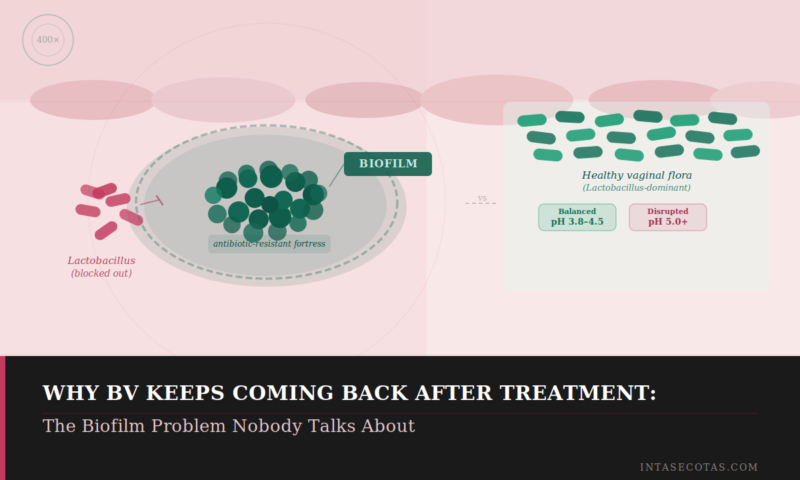
Bacterial vaginosis (BV) occurs if Lactobacillus bacteria in the vagina are outnumbered by anaerobic bacteria like Gardnerella. BV usually occurs when the vaginal pH rises above 4.5.
Before menopause, oestrogen keeps this balance steady. After menopause, that support fades.
The Oestrogen-Glycogen-Lactobacillus Chain
Your vaginal flora depends on a simple chain of events:
- Oestrogen tells the vaginal lining to store glycogen, a type of sugar.
- These lactobacilli organisms get their food from this glycogen.
- They convert it into lactic acid, which maintains low vaginal pH.
The presence of glycogen, which is dependent on estrogen levels, makes lactobacillus a good energy source. This explains why women entering menopause are at increased risk of developing BV.
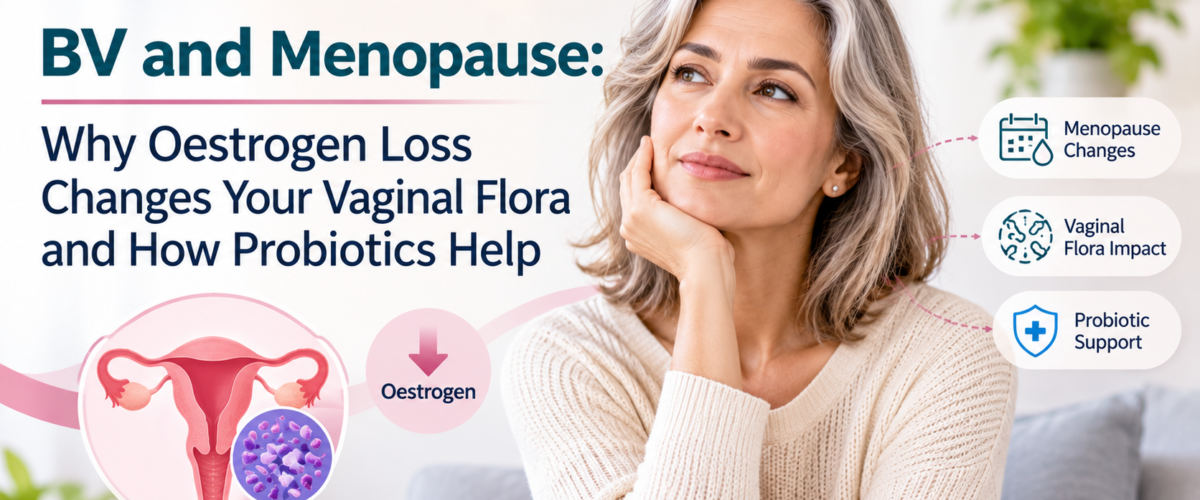
When oestrogen drops, the chain breaks. Lower oestrogen in postmenopausal women depletes lactobacilli and raises vaginal pH, which allows harmful microorganisms to colonise more easily. In simple terms: less fuel, fewer protective bacteria, higher pH, more room for BV.
How Your Vaginal Flora Changes Through Menopause
Perimenopause: The Early Warning Phase
Oestrogen does not fall in a straight line during perimenopause. It swings up and down. These swings can make BV flare unpredictably, and some women notice new patterns around their periods or after sex.
After Menopause: A Lasting Shift
When the level of oestrogen remains low, then change will be permanent. As blood oestrogen declines with age, the Lactobacillus population falls sharply. The vaginal lining also thins and loses elasticity, which raises the risk of BV and genitourinary symptoms.
Research on postmenopausal women with vaginal atrophy found an average vaginal pH of around 6.6, far above the healthy 3.8 – 4.5 range. That is a very different environment from the one that protected you in your reproductive years.
Common Signs to Watch For
- Thin, grey or white discharge
- A fishy odour, often stronger after sex
- Vaginal dryness, itching, or burning
- Discomfort during intercourse
- More frequent urinary symptoms or UTIs
These signs overlap with other menopausal conditions, so a proper diagnosis matters. If symptoms appear for the first time after menopause, see your doctor. Bleeding or other unusual changes should always be checked.
Why BV Can Keep Returning After Menopause
Many women find that antibiotics clear BV, only for it to return. Recurrent BV is usually defined as three or more episodes within 12 months, and it is a familiar pattern in the menopausal years.
The reason is straightforward. Antibiotics remove the harmful bacteria, but they do nothing to fix the low-oestrogen environment that allowed BV to take hold. Without strong Lactobacillus populations rebuilding, the door stays open.
How Probiotics Help with BV and Menopause
A probiotic does not replace antibiotics for an active infection. What it can do is support the Lactobacillus populations that menopause depletes.
Probiotics promote the growth of beneficial microorganisms, change the makeup of the vaginal flora, and can reduce symptoms such as discharge and odour in postmenopausal women.
The research is encouraging, though still developing. A review in Maturitas notes that oral and vaginal probiotics hold great promise for restoring vaginal balance after menopause, but says more trials are needed to confirm how well they work. One small observational study of 50 postmenopausal women also tracked changes in vaginal flora after four weeks of oral probiotic use. The women were aged 45 to 65 and had been postmenopausal for at least 18 months.
Probiotics work best alongside other care, not instead of it:
- Treat active BV first – Follow your doctor’s antibiotic plan and finish the course.
- Rebuild afterwards – Start probiotic support during or straight after treatment, spacing capsules at least two hours from your antibiotic.
- Ask about vaginal oestrogen – Hormone replacement therapy directly influences the dominance of Lactobacillus and can resolve vaginal symptoms. Local vaginal oestrogen is one option to discuss with your GP or gynaecologist.
- Stay consistent – The vaginal flora rebuilds gradually. Daily use over several weeks matters more than occasional doses.
Practical Tips for Protecting Your Flora After Menopause
- Skip douching – It washes away the Lactobacillus you are trying to protect.
- Use fragrance-free products – Wash the outer vulva only, with mild, unscented products.
- Pick breathable undergarments – Cotton aids in decreasing moisture build-up.
- Apply a water-based moisturizer/lubricant – In case of dryness, and read the labels at the pharmacy.
- Control stress and get adequate sleep – Stress impacts hormonal balance and your immune system.
- Do not self-diagnose – BV, yeast infections, and atrophic vaginitis can look similar but need different treatments.
How Ecotas BV Can Help
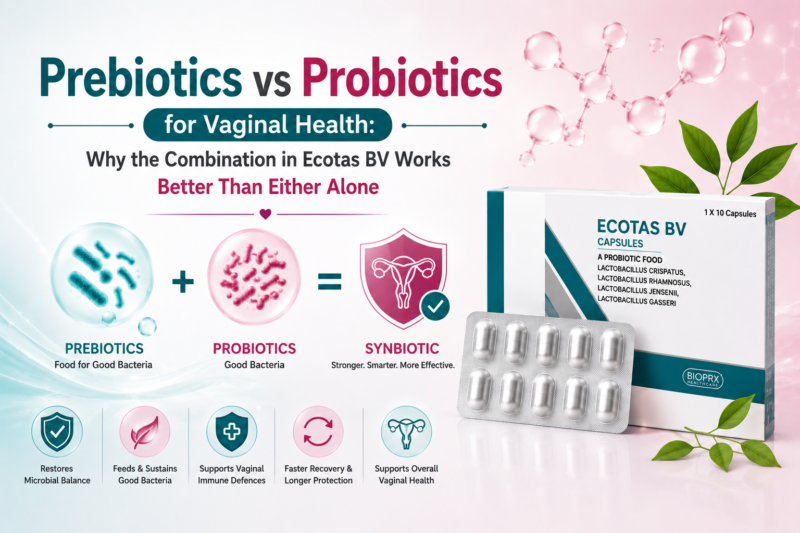
Ecotas BV for vaginal health is a daily capsule for vaginal health, designed to support the Lactobacillus populations that oestrogen loss leaves exposed. It is not a treatment for active BV, but a daily foundation that works alongside your doctor’s advice.
Each pill includes a combination of four lactobacilli strains and prebiotics:
- L. crispatus helps in producing lactic acid and hydrogen peroxide and is responsible for keeping the vagina acidic environment.
- L. rhamnosus is probably the best studied vaginal strain and helps compete with BV bacteria.
- L. jensenii is a natural vaginal inhabitant, which helps in producing lactic acid and maintaining good microbiological balance.
- L. gasseri helps form a protective bacterial layer on the vaginal lining and supports defence against Candida.
The formula also includes fructo-oligosaccharides (FOS), a prebiotic that feeds these strains. This matters after menopause, when the natural glycogen fuel supply is reduced.
Taken once a day with water, preferably with a meal, Ecotas BV offers simple, consistent microbiome support through a life stage when your flora needs it most. If you are pregnant, breastfeeding, or managing a health condition, speak to your healthcare provider before starting any supplement.
The Bottom Line
BV and menopause go hand in hand because oestrogen is the fuel behind your protective Lactobacillus bacteria. When it falls, vaginal pH rises, flora shifts, and bacterial vaginosis after menopause becomes more likely.
You cannot stop menopause, but you can support your vaginal flora through it: treat active infections properly, discuss oestrogen options with your doctor, avoid microbiome disruptors, and add daily probiotic support. Ecotas BV for vaginal health is built for exactly that kind of steady, everyday care.
Frequently Asked Questions
Can Menopause Lead to BV?
Menopause does not cause BV, but increases its chances because falling oestrogen causes less production of glycogen, which affects Lactobacilli and increases vaginal pH. That environment makes it easier for BV-associated bacteria to take over.
Is bacterial vaginosis after menopause common?
Yes, BV and complicated vulvovaginal candidiasis are common postmenopausal vaginal infections. Because symptoms overlap with dryness and atrophy, many women do not realise BV is involved until they are tested.
Can probiotics help with BV after menopause?
They can support recovery, but they are not a cure. Probiotics may help rebuild Lactobacillus populations after antibiotic treatment, though researchers say more large trials are still needed. Use them alongside medical care, not in place of it.
Should I use vaginal oestrogen or a probiotic?
They work in different ways, and some women use both. Oestrogen taken vaginally works to counter the hormonal reason, and the use of probiotics helps the bacterial flora. Your doctor will assist in making a suitable choice for your condition.
How long does it take to notice a difference?
Most women need several weeks of daily use before noticing changes in comfort, discharge, or odour. The vaginal flora rebuilds slowly, so consistency is key.
Can BV go away for good after menopause?
Some women have been successful in getting long-term remission; however, the vaginal microflora is very dynamic and may alter again. This is the reason why continuous help and proper lifestyle are more important than once-in-a-lifetime efforts.