
Most women only think about their vaginal health when something goes wrong. A BV diagnosis, a yeast infection, an uncomfortable odour and then the antibiotics, the antifungal, the temporary fix. Until the next time.
The missing piece in that reactive cycle is this: vaginal flora balance is not a fixed state that your body maintains automatically. It is an ecosystem that changes with every hormonal change, every use of antibiotics, every stressful episode, and even seasonally through the year. But the defense it affords against BV, yeast infection, UTI, and urogenital risks is there only when there is a healthy presence of Lactobacilli.
Understanding why maintaining vaginal flora balance year-round requires consistent, daily attention is the insight that changes the entire conversation about vaginal health from reactive to proactive.
What “Vaginal Flora Balance” Actually Means
The term “vaginal flora balance” refers to the microbial composition of the vaginal microbiome and specifically, the dominance of Lactobacillus bacteria within it.
There are many microbial colonisations in the vagina of healthy women, among which Lactobacillus plays a major role comprising up to 95% of the healthy vaginal microbiome. Based on the different species of specific Lactobacillus, the vaginal microbiome can be divided into five different community state types (CSTs). Four of these are predominantly dominated by a specific Lactobacillus species L. crispatus, L. gasseri, and L. jensenii respectively while the fifth (CST IV) is characterised by a low-Lactobacillus, high-diversity community associated with vaginal dysbiosis.
The vaginal microbiome is now largely recognised as a balanced ecosystem dominated by Lactobacillus species, with notable fluctuation over time and across individuals. Under physiological conditions, this Lactobacillus-dominant arrangement has long been regarded as an indicator of vaginal health. The production of lactic acid, biosurfactants, bacteriocin-like chemicals, and hydrogen peroxide by these bacteria, which varies from strain to strain, can acidify the vaginal microenvironment, inhibit the proliferation of other pathogenic microorganisms, and thereby promote the maintenance of a healthy vaginal microbiome.
Vaginal flora balance, in practical terms, means:
- Lactobacillus species dominate the vaginal bacterial community
- Vaginal pH is maintained in the protective 3.8 – 4.5 acidic range
- Harmful anaerobic bacteria and Candida are actively suppressed
- The vaginal epithelial barrier maintains its structural and immune integrity
When this balance holds consistently, not just between infections your vagina maintains its own extraordinary natural defences. When it does not, the window for opportunistic infections opens repeatedly.
Why Vaginal Flora Balance Is Harder to Maintain Than Most Women Realise
The composition of the vaginal microbiome is constantly changing. Hormonal fluctuations throughout a woman’s reproductive life including menstruation and pregnancy along with medications such as antibiotics and hormonal contraceptives, sexual activity, and vaginal douching are all factors that can disrupt the normal flora.
These disruptions are not occasional events. They are monthly, sometimes weekly, realities of female reproductive life. Consider a single month in the life of a typical woman of reproductive age:
- The late luteal phase brings a pre-period oestrogen dip that reduces glycogen availability and weakens Lactobacillus fuel supply
- Menstruation raises vaginal pH to near-neutral with alkaline blood, temporarily removing the acid environment Lactobacillus depends on
- Sexual activity particularly with semen exposure temporarily elevates vaginal pH each time
- Any antibiotic course (for any infection, not just vaginal) depletes Lactobacillus populations as collateral damage
- Stress a near-constant feature of modern life suppresses oestrogen through chronic cortisol elevation, again reducing the glycogen chain
- Sleep disruption compromises both the immune surveillance and the hormonal balance that Lactobacillus requires
A vaginal flora with a reduced proportion or abundance of Lactobacillus can lead to vaginal dysbiosis, which is related to vaginal infections such as bacterial vaginosis, vulvovaginal candidiasis, aerobic vaginitis, HPV infection, and other sexually transmitted infections.
Every one of these disruptions occurs on a monthly cycle overlapping, compounding, and leaving a significantly smaller window of genuine vaginal flora balance than most women realise. Without active, consistent support, the microbiome is constantly recovering from one disruption and sliding toward the next.
Why Reactive Treatment Is Never Enough
The standard approach to vaginal infections antibiotics for BV, antifungal for thrush treats the symptomatic episode. It does not restore vaginal flora balance. It does not rebuild Lactobacillus populations. And it does not prevent the next disruption from triggering another imbalance.
The vaginal microbiome is sensitive and can be thrown off balance by many factors, some internal, and some external. The vagina is very good at self-cleaning and looking after itself, however, there are things we can do to support vaginal health and help maintain healthy vaginal microflora.
This gap between antibiotic treatment and microbiome restoration is where most recurrences originate. Current therapy for BV involves oral or intravaginal administration of metronidazole or clindamycin, albeit the high recurrence rates suggest a need for alternative therapeutic tools, such as probiotics.
And the evidence for probiotics as that alternative tool is growing significantly. A prospective observational study on women with asymptomatic BV found that after two months of oral multi-strain probiotic supplementation, Lactobacillus species doubled in the vaginal microbiome, while bacterial genera typically associated with dysbiosis including Megasphaera spp. were significantly decreased.
That result was not achieved with antibiotics. It was achieved with consistent, daily probiotic supplementation, the exact approach that reactive treatment alone can never deliver.
What Consistent Year-Round Support Actually Looks Like
Maintaining vaginal flora balance through the full calendar of hormonal, lifestyle, and environmental disruptions requires a fundamentally different mindset: prevention as the default, not treatment as the response.
In practice, year-round consistent support means:
Daily Probiotic Supplementation Not Cyclical or Symptomatic Use
To maintain the balance of the vaginal flora, women may benefit from a daily probiotic formulation that contains Lactobacillus strains to help maintain the microflora in a normal range and support vaginal health.
Taking a probiotic only during or after an infection is like watering a plant only when it wilts. The goal is to maintain the Lactobacillus population consistently at levels high enough to withstand the monthly disruptions not to rebuild it from scratch each time.
Through Every Season and Life Phase
Vaginal flora balance demands particularly close attention during known vulnerability windows:
- Autumn and winter reduced sun exposure lowers vitamin D, which influences vaginal immune function; seasonal stress and illness trigger antibiotic use and immune suppression
- Summer heat, swimwear moisture, and increased sexual activity during holidays all create microbiome stress
- Perimenopause and postpartum oestrogen withdrawal during these phases causes the most sustained Lactobacillus depletion outside of antibiotic use; consistent probiotic support is most critical here
- After every antibiotic course starting a probiotic immediately alongside or after any antibiotic treatment (not just those prescribed for BV) is the single most impactful reactive step that supports long-term balance
Supporting Protective Hygiene Habits Consistently
Daily Lactobacillus support works best when it is not being undermined by avoidable microbiome disruptors. Year-round habits that protect vaginal flora balance include:
- External-only washing with fragrance-free, pH-appropriate products never douching
- Breathable cotton underwear particularly during warm months or during intensive exercise
- Regular menstrual product changes to minimise prolonged alkaline blood contact
- Consistent condom use with new or multiple sexual partners to prevent pH disruption from semen exposure
How Ecotas BV Supports Vaginal Flora Balance Every Day of the Year
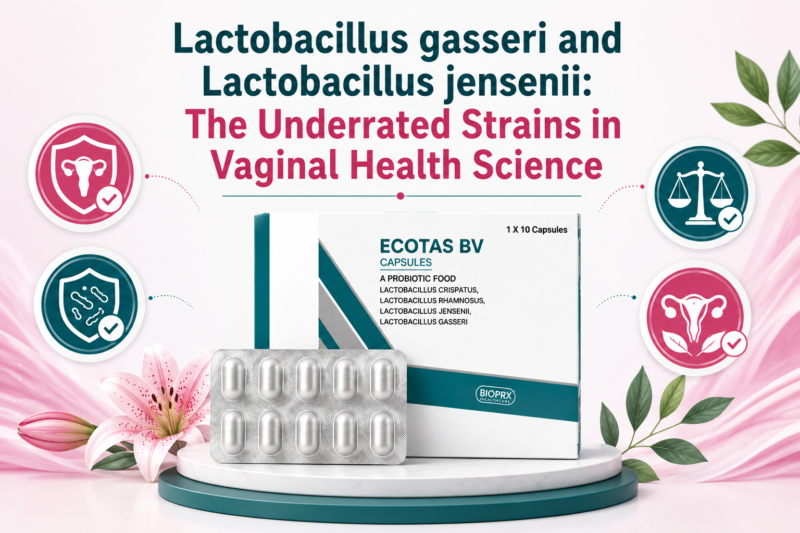
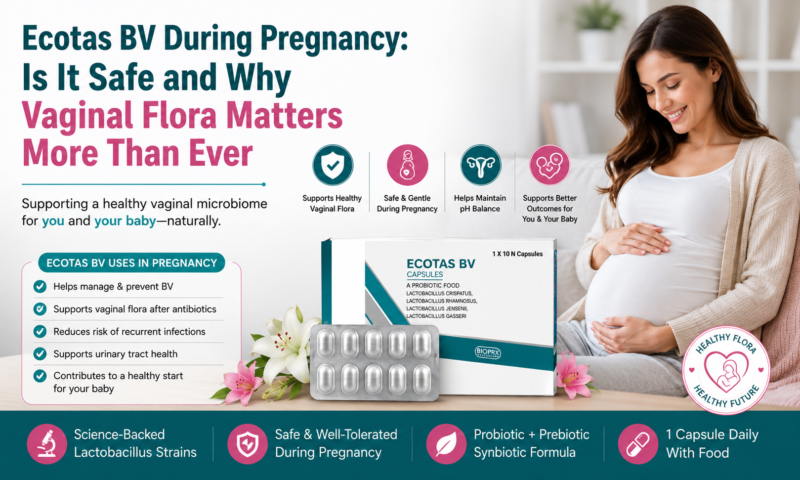
Ecotas BV for vaginal health is designed as a year-round daily synbiotic not a short-course treatment, but a consistent daily foundation for vaginal flora balance through every hormonal phase, every season, and every life stage.
Taking specific probiotics orally has been found to maintain a healthy balance of vaginal flora. The main probiotics that appear to be beneficial are Lactobacillus strains including those specifically validated for the vaginal microbiome environment.
The daily capsule for vaginal health in Ecotas BV delivers this year-round support through a four-strain Lactobacillus synbiotic built around the species that maintain vaginal flora balance most effectively:
- L. crispatus the most prolific producer of lactic acid and hydrogen peroxide; the dominant species in the healthiest, most stable vaginal community type; the cornerstone of consistent protective pH maintenance through every hormonal phase
- L. rhamnosus the most clinically researched vaginal strain globally; resilient through digestive transit; maintains BV and yeast suppression through the high-disruption windows of menstruation and post-antibiotic recovery
- L. jensenii a native vaginal resident that contributes competitive exclusion of dysbiosis-associated anaerobes through every season; naturally depleted during oestrogen-low phases when support matters most
- L. gasseri produces the biosurfactants and bacteriocins that keep Candida and harmful anaerobes from establishing particularly valuable during the summer and during high-stress periods when both fungal and bacterial opportunism increases
The fructo-oligosaccharides (FOS) prebiotic in the Ecotas BV formula feeds all four Lactobacillus strains daily sustaining their populations through the repeated glycogen disruptions caused by hormonal cycling, stress, and antibiotic exposure and independently activating the vaginal immune defences that antimicrobial support requires.
As oestrogen levels drop through various life stages, probiotics can help replenish the Lactobacillus in the vaginal tract and increase the cell lining in the vagina, helping to improve symptoms. This role compensating for oestrogen-driven glycogen loss with a consistent dietary Lactobacillus fuel source is most valuable precisely when the vaginal microbiome is under its greatest natural seasonal or hormonal pressure.
Ecotas BV for vaginal health is for the woman who has decided that consistently protecting her vaginal flora balance year-round is more important than treating infections after they arrive.
The Bottom Line
Vaginal flora balance is not a passive state; it is an active, daily achievement of a microbial ecosystem under constant hormonal, lifestyle, and environmental pressure. The standard reactive approach treats the infection, skipping the daily support leaves that ecosystem perpetually vulnerable to the next disruption.
Consistent, year-round probiotic support is not overcaution. It is the most evidence-aligned approach to vaginal health that exists. And Ecotas BV for vaginal health is built precisely for that consistency, a daily capsule that gives your vaginal microbiome the Lactobacillus foundation it needs to protect you, twelve months a year.
Frequently Asked Questions
What is vaginal flora balance, and why is it important?
Vaginal flora balance is a situation where the Lactobacillus strains of bacteria predominate in the vaginal microbiome, ensuring an acidic pH of 3.8 to 4.5 that prevents the growth of undesirable bacteria and fungus. A vaginal flora balance ensures that there are strong natural defenses for protecting the vagina from diseases such as bacterial vaginosis, UTIs, yeast infections, and STIs when the balance is disturbed by hormonal, stress, or other influences.
Why does vaginal flora keep getting disrupted?
The composition of the vaginal microbiome is constantly changing due to hormonal fluctuations, medications such as antibiotics and hormonal contraceptives, sexual activity, and vaginal douching. These disruptions are not rare events; they are monthly, often weekly, realities of reproductive-age life. The maintenance of healthy vaginal flora is dependent on daily maintenance that addresses these frequent disruptions rather than just treating vaginal infections.
How long does it take for the restoration of vaginal flora balance by probiotics?
The results of a two-month study show that daily intake of multi-strain probiotics increased Lactobacilli twofold in women with asymptomatic BV and decreased the dysbiosis-related bacteria. Most women notice improvements in discharge consistency and vaginal comfort within four to six weeks. Full, stable Lactobacillus dominance, the true measure of restored vaginal flora balance typically establishes over eight to twelve weeks of consistent daily use.
Should I take a probiotic for vaginal health every day or only when I have symptoms?
Every day and this are the most important insight about vaginal flora balance that most women miss. Sporadic or symptomatic probiotic use does not maintain the consistent Lactobacillus populations needed to withstand the monthly cycle of hormonal and environmental disruptions. A daily capsule for vaginal health provides the ongoing population support that makes the microbiome resilient, not just reactive.
Can I maintain vaginal flora balance through diet alone?
Diet supports the overall microbiome environment fermented foods, low sugar intake, vitamin C, and omega-3s all contribute but diet alone cannot deliver the specific vaginal Lactobacillus strains needed for consistent protection. Women may benefit from a daily probiotic formulation that contains specific Lactobacillus strains to help maintain the microflora in a normal range. A synbiotic that combines targeted vaginal strains with fructo-oligosaccharides prebiotic like Ecotas BV provides what diet alone cannot: the right bacteria, in the right amounts, consistently delivered.