You finish your antibiotics. The smell is gone. The discharge is back to normal. You feel better and you think: finally, it’s over.
Then, a few weeks later, it’s back.
If recurrent bacterial vaginosis feels like a never-ending cycle, you are not imagining it. Studies show that up to 50% of women experience BV recurrence within a year of treatment. The question most people and even some doctors don’t fully ask is: why does BV keep coming back?
The honest answer is more complicated than “you need more antibiotics.” And the biggest piece of the puzzle is something called a biofilm, a hidden bacterial shield that standard treatments simply can’t break through.
What Is Recurrent Bacterial Vaginosis?
Bacterial vaginosis (BV) is the most common vaginal infection worldwide. It happens when the natural balance of bacteria in the vagina shifts your protective Lactobacillus bacteria get outnumbered by harmful bacteria like Gardnerella vaginalis and other anaerobes.
Recurrent bacterial vaginosis is diagnosed when BV comes back three or more times within 12 months. It is different from treatment failure (where BV never fully clears). In recurrent BV, the infection clears temporarily but then returns, often within weeks.
If you have been stuck in this cycle, the root cause usually isn’t poor hygiene or a weak immune system. It is biology. Specifically, it is the way certain bacteria have learned to survive inside your body long after treatment ends.
The Real Reason BV Keeps Coming Back: Biofilm
Here is the part that most people never hear about.
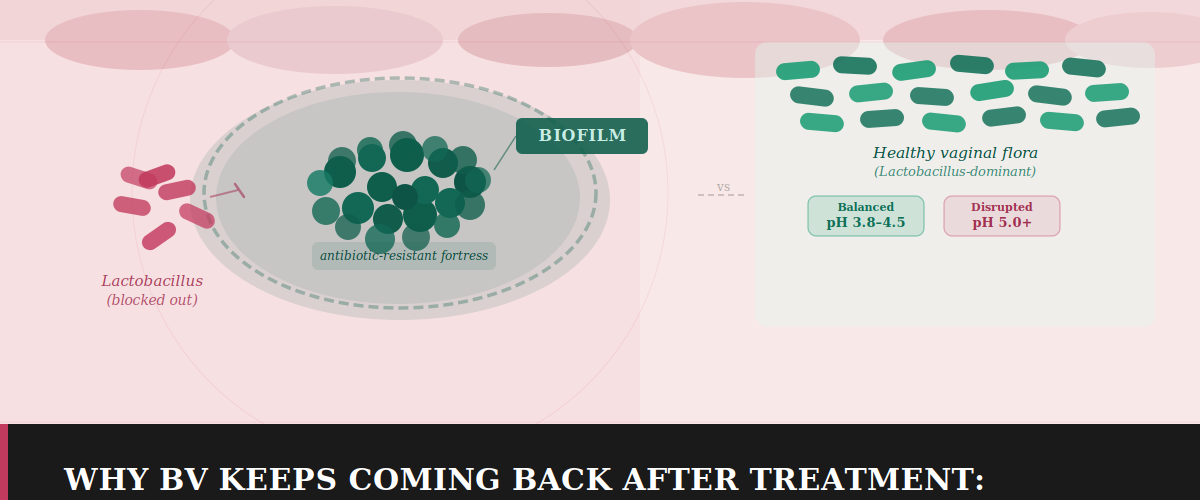
Certain BV-causing bacteria particularly Gardnerella vaginalis can form a bacterial vaginosis biofilm. Think of a biofilm as a microscopic fortress. The bacteria cluster together, coat themselves in a thick, sticky, protective layer, and attach themselves directly to the walls of your vagina.
There are two extremely risky attributes of the BV biofilm:
1. It Makes BV Bacteria Antibiotic-Resistant
Standard antibiotics like metronidazole work by reaching bacteria and disrupting their function. But when harmful bacteria are living inside a biofilm, the antibiotic simply cannot penetrate deeply enough to reach them. The bacteria inside survive, go dormant, and wait.
After finishing the course of antibiotics, they come back, and the process starts all over again.
2. It Prevents Healthy Bacteria from Returning
Healthy vagina flora consists mostly of bacteria of the Lactobacillus genus. These bacteria produce lactic acid, which keeps your vaginal pH low and hostile to harmful microbes. But if a biofilm is still clinging to your vaginal walls, Lactobacillus bacteria cannot recolonise properly. There is no room. The bad bacteria have essentially claimed the territory.
This is why antibiotics alone without rebuilding the vaginal microbiome rarely prevent BV from recurring long-term.
Other Reasons BV Keeps Coming Back
The bacterial vaginosis biofilm is the biggest factor, but it is not the only one. Here are other common triggers for recurrent BV:
Sexual Contact and Sexual Transmission
The microbes causing BV are transferable from one sexual partner to another during sexual activity. The male semen is alkaline in nature and thus changes the pH balance in the vagina and creates an unfavorable acidic environment for Lactobacillus. Treatment of the male partner has also been found effective in decreasing BV recurrence cases.
Incomplete Lactobacillus Recovery
Antibiotics destroy pathogenic bacteria, but it is also important to understand that they decrease Lactobacillus numbers. If there is no proper treatment through probiotics or diet, then the vaginal flora will not be able to recover properly before pathogens start multiplying again.
Hormonal Changes
Oestrogen affects the vaginal ecosystem. Women going through menopause, hormonal shifts mid-cycle, or using certain contraceptives may notice that recurrent bacterial vaginosis tracks with these changes. Lower oestrogen means a thinner vaginal lining, which is harder for Lactobacillus to colonise.
Irritating Products
Scented soaps, douches, and fragranced feminine wipes alter your vaginal pH. They strip away natural protective bacteria and make it easier for BV-associated bacteria including those hidden in a biofilm to regrow.
How to Prevent BV From Recurring: What Actually Helps?
Breaking the cycle of recurrent bacterial vaginosis requires more than antibiotics alone. Below are the following guidelines to help maintain the health of your vagina:
1. Finish your full round of antibiotics; do not prematurely discontinue the use of them just because you feel better. Incomplete antibiotic course results in residual biofilm of the bacterial vaginosis infection.
2. Taking probiotics to restore vaginal flora balance may be considered one of the most crucial steps. The probiotic strains of Lactobacillus rhamnosus and Lactobacillus reuteri show the most promising clinical results in fighting BV. Daily consumption of a probiotic capsule specifically targeted at vaginal flora will allow you to replenish the population of bacteria, which are depleted when using antibiotics and compete with bacteria that cause BV in space and create an environment hostile to them.
3. Avoiding vaginal douching is one of the fastest ways to disrupt your vaginal ecosystem. The vagina is self-cleaning; it does not need internal washing.
4. Use condoms regularly; condoms can protect the natural vaginal pH levels and prevent BV-related bacteria exposure during intercourse.5. Speak with your doctor about prolonged or suppressive treatment. For recurrent BV cases in women, suppressive antibiotic therapy (for example, metronidazole gel two times per week) might be suggested until the microbiome is restored.
How Ecotas BV Supports Your Vaginal Microbiome Every Day?
Controlling and preventing recurrent bacterial vaginosis requires more than just treating your symptoms as soon as they arise; it is a matter of fostering a vaginal environment in which BV cannot thrive easily.
That’s precisely what Ecotas BV is all about.
Ecotas BV is a scientifically formulated supplement in capsule form that maintains the proper functioning of the vaginal flora by balancing its microbiome with specially formulated probiotics and nutrients. The continuous use of Ecotas BV, a daily capsule for vaginal health, helps ensure and maintain the acidic vaginal state necessary to control BV-causing bacteria and their biofilm.
Ecotas BV uses:
- Restoration of vaginal microbiome in terms of beneficial Lactobacillus colonies
- Supporting a low vaginal pH environment to preventing harmful bacterial overgrowth
- Helping in prevention of recurrent bacterial vaginosis after antibiotic treatment
- Providing consistent microbiome support without causing disruption of natural balance
No matter whether you need to prevent BV recurrence after the infection or have had several episodes of it recently, Ecotas BV capsule provides an effective, easy-to-use and gentle solution to your problem.
The Bottom Line
Recurrence of bacterial vaginosis is not your fault. It is a biological challenge rooted in the remarkable ability of BV-associated bacteria to survive, hide inside biofilms, and regrow when conditions allow.
Understanding why BV keeps coming back is the first step to actually stopping it. The second step is giving your body the right support not just during a flare-up, but every single day. That means restoring protective Lactobacillus bacteria, maintaining a healthy vaginal pH, and consuming probiotics regularly.
Frequently Asked Questions
– Why does BV keep coming back even after antibiotics?
The most frequent cause of this is the biofilm of BV. Pathogenic bacteria develop a protective coating within the vagina, which the antibiotic medication cannot completely destroy. These remaining bacteria reproduce again after treatment, leading to a recurrence of BV. Rebuilding your Lactobacillus populations through probiotics for vaginal health is an important part of long-term prevention.
– Can BV go away permanently?
For some women, long-term remission is achievable. This usually takes a combined effort of finishing a course of antibiotics, regaining healthy vaginal flora (usually taking a pill daily to maintain vaginal health), as well as identifying and avoiding triggers. However, because the vaginal microbiome is a dynamic ecosystem influenced by ongoing hormonal, lifestyle, and environmental factors, no outcome can be guaranteed as permanent.
– Is recurrent BV indicative of another underlying problem?
Recurrent bacterial vaginosis can increase your risk of contracting STIs and, during pregnancy, may affect birth outcomes. It is worth discussing with your GP or gynaecologist if BV keeps coming back three or more times within 12 months.
– Do probiotics actually help with BV?
Yes, there is clinical evidence that certain strains of Lactobacillus, especially L. rhamnosus and L. reuteri, help prevent BV from coming back. Vaginal probiotics operate by reintroducing good bacteria to the vaginal microflora to inhibit the growth of BV.
– Can stress cause BV to come back?
Stress can affect your immune response and hormonal balance, both of which influence the vaginal microbiome. Although stress is not a direct cause of BV, it can be one of many contributing factors because stress affects the habitat in which the Lactobacillus thrives.