Misinformation about vaginal health is everywhere in beauty aisle marketing, well-meaning family advice, and half-remembered conversations from school. And for women managing bacterial vaginosis, some of those vaginal health myths are not just unhelpful, they are actively making the problem worse.
The frustrating reality is that many of the things women do to feel cleaner, fresher, and more in control of their vaginal health are the exact practices that destabilise the vaginal microbiome and increase BV risk. Understanding which beliefs are myths and why is one of the most practically valuable things you can do for your long-term vaginal health.
Here are the seven most common and damaging vaginal health myths that healthcare providers wish more women knew about.
Myth 1: BV Means You Are Dirty or Have Poor Hygiene
This is the most pervasive and most harmful of all vaginal health myths and it keeps women from seeking care out of shame when they should be seeking diagnosis and treatment.
Outdated notions persist that BV is an STI or that people who get it have bad hygiene. Neither is true.
Bacterial vaginosis is a microbiome imbalance a shift in the ratio of protective Lactobacillus bacteria to anaerobic bacteria that can be triggered by hormonal fluctuations, antibiotic use, stress, menstrual blood, and semen exposure. None of these triggers are hygiene failures. None of them are moral failings.
BV can occur in people who are not sexually active, so it should not be viewed as proof of sexual behaviour or as a hygiene failure.
The shame attached to this myth is medically significant because it leads women to douche, one of the most reliable ways to cause BV in an effort to “fix” a perceived hygiene problem. This myth does not just hurt feelings; it actively drives behaviour that makes BV worse.
Myth 2: Douching Cleans the Vagina and Prevents Infection
Your vagina cleans itself naturally with discharge, so it is not something that needs to be “flushed out.” Both the CDC and American College of Obstetricians and Gynecologists (ACOG) advise against routine douching because it raises the risk of BV, pelvic inflammatory disease, and other complications.
Douching is perhaps the single most dangerous of all vaginal health myths in practice. The vagina is a self-regulating organ. Its natural discharge removes dead cells, bacteria, and debris while maintaining the acidic pH that keeps the microbiome balanced.
“Douching disrupts the healthy vaginal bacteria and protective mucus layer, increasing susceptibility to bacterial vaginosis and sexually transmitted infections upon exposure.”
When you douche, you do not remove harmful bacteria selectively, you flush out the Lactobacillus bacteria that maintain the protective acid environment, leaving the vaginal walls vulnerable to the very pathogens you were trying to prevent. Washing inside the vagina does not protect against BV and may upset the natural balance. Strong cleansers, antiseptics, and perfumed products can irritate delicate tissue. The vagina is self-cleaning, so prevention is usually better supported by leaving the internal environment alone and caring gently for the outer vulvar area only.
Myth 3: Scented Intimate Products Keep You Fresh and Prevent BV
Feminine hygiene marketing has done enormous damage here. Scented sprays, fragranced wipes, perfumed tampons, and scented vaginal washes are marketed as freshness tools but they are, in practice, BV risk factors.
Scented soaps, deodorising sprays, and fragranced products may disturb the vaginal environment and increase the chance of BV rather than prevent it.
The vagina has its own natural odour, which varies throughout the menstrual cycle. A subtle change in smell is often a sign of pH shift and addressing it with a fragranced product treats the symptom while accelerating the underlying cause.
The vaginal health myth here is that freshness requires added fragrance. The reality is that anything applied inside the vaginal canal or to the vulva with synthetic fragrance or high pH disrupts the acid environment that Lactobacillus maintains. A mild, fragrance-free soap for the outer vulva never internally is all that evidence-based vaginal hygiene requires.
Myth 4: BV Will Go Away On Its Own Without Treatment
BV sometimes resolves on its own. However, if your symptoms persist for several days without improvement, a course of antibiotics may be advised. Make an appointment with your gynaecologist if your bacterial vaginosis does not reduce after a week of home treatment, or is recurrent.
While occasional, mild BV episodes may self-resolve particularly in women with robust Lactobacillus populations that recover quickly after a disruption this is far from reliable. And waiting it out carries real risks.
Untreated BV is associated with increased susceptibility to STIs including HIV, a higher risk of pelvic inflammatory disease, pregnancy complications including preterm birth, and post-surgical infections. Vaginitis symptoms discharge, itching, burning, or odour may be present without a woman realising a clinical infection is progressing.
The vaginal health myth that BV is minor or self-limiting leads women to delay treatment during precisely the window when early antibiotic therapy is most effective and when microbiome support can most meaningfully prevent recurrence.
Myth 5: A Yeast Infection and BV Are the Same Thing and Treat the Same Way
While the symptoms of vaginitis can be caused by various conditions, not all vaginal infections are the same. Bacterial vaginosis and vulvovaginal candidiasis (yeast infection) produce overlapping symptoms but have completely different causes requiring completely different treatments.
This is one of the vaginal health myths with the most damaging practical consequences. BV is caused by bacterial overgrowth; yeast infections are caused by Candida fungal overgrowth. Antibiotics treat BV; antifungals treat yeast infections. Treating BV with an over-the-counter antifungal will not work. Treating a yeast infection with antibiotics will not work and may actually make the yeast infection worse by further depleting the Lactobacillus that suppresses Candida.
The multiple causes and often overlapping symptoms of vaginal infections can make correct diagnosis a challenge. If you are uncertain which condition you have, a clinical swab diagnosis before treatment is always the right step, not a guess at the pharmacy.
Myth 6: Diet Does Not Influence Vaginal Health
Many women assume that vaginal health has nothing to do with diet; that whatever they eat will not affect their chances of getting BV or maintaining their microbiome. This might not be true according to the evidence that keeps pouring in.
The latest evidence indicates that the diet of an individual may have a significant effect on the vaginal microbiome, and hence represents an opportunity to reduce risk factors of BV. Dietary deficiencies in Vitamins A, C, E, and D increase the chances of a woman getting BV because of the effects they have on the immune system and the epithelium of the vagina. Conversely, high glycemic diets appear to promote BV through increased oxidative stress.
This does not mean diet can replace antibiotic treatment or daily probiotic support. But the vaginal health myth that food is irrelevant to vaginal flora leaves women unaware of a genuinely modifiable risk factor. Reducing refined sugar, increasing vitamin C and D intake, and supporting the gut microbiome through fermented foods and dietary fibre all contribute to the systemic environment in which the vaginal microbiome operates.
Although there is no evidence that the foods we eat directly alter vaginal pH levels, what we eat does affect our entire body and for a healthier body, both inside and out, a healthy and balanced diet makes sense.
Myth 7: Probiotics Are Only for Gut Health They Don’t Help the Vagina
This vaginal health myth is fading as clinical evidence accumulates but it persists widely enough to be worth addressing directly.
The gut and vaginal microbiome are connected through the gut-vaginal axis, a biological pathway through which bacteria from the lower gut can migrate to colonise the vaginal environment. Orally administered Lactobacillus probiotics that survive the digestive tract can and do reach the vaginal microbiome through this route.
The clinical evidence is clear. Studies have shown that oral multi-strain Lactobacillus supplementation doubles Lactobacillus populations in the vaginal microbiome of women with bacterial vaginosis after consistent daily use, significantly reducing dysbiosis-associated bacteria. Specific strains including L. crispatus, L. rhamnosus, L. gasseri, and L. jensenii are validated in human clinical trials for vaginal microbiome restoration, not just gut health.
The distinction matters enormously when choosing a supplement. A generic gut probiotic containing Lactobacillus acidophilus or Bifidobacterium strains is optimised for the digestive environment not the vaginal one. A daily capsule for vaginal health containing clinically validated vaginal Lactobacillus strains is an entirely different intervention.
How Ecotas BV Helps You Move Past the Myths
Understanding what does not support vaginal health is the first step. The second step is giving your vaginal microbiome the evidence-based, daily support it genuinely needs instead of the marketed solutions that the vaginal health myths above have been selling for decades.
Ecotas BV for vaginal health is built on science, not marketing.
- No fragrance, no unnecessary additives just a clean synbiotic formulation designed for the vaginal microbiome specifically
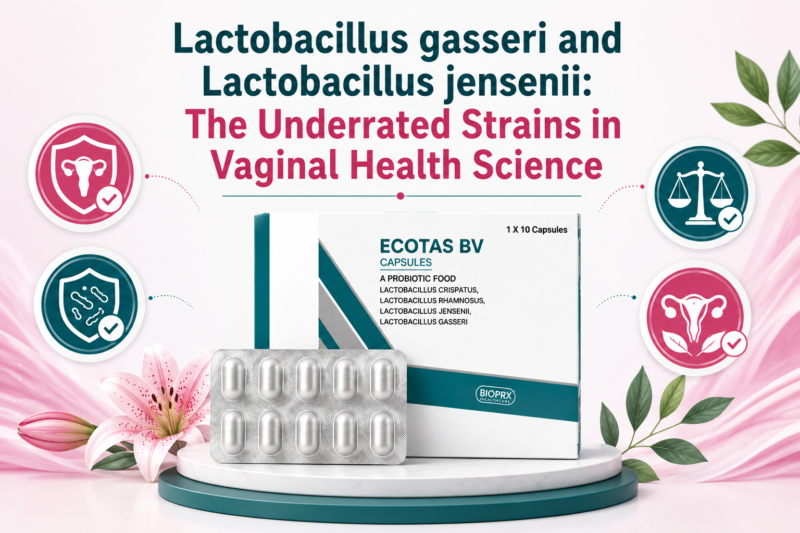
- Four clinically validated vaginal Lactobacillus strains (L. crispatus, L. rhamnosus, L. jensenii, L. gasseri) not generic gut strains renamed for vaginal use
- Fructo-oligosaccharides (FOS) prebiotic that feeds the probiotic bacteria and improves colonisation through the gut-vaginal axis
- Developed under European clinical collaboration specifically for BV and vaginal health support
The daily capsule for vaginal health in Ecotas BV is what support looks like when it is built on evidence rather than myth consistent, targeted, and grounded in how the vaginal microbiome actually works.
The Bottom Line
The vaginal health myths in this post are not harmless misunderstandings; they are active drivers of BV recurrence, treatment delays, and ongoing microbiome disruption. Douching is not cleaning; it is destabilising. Scented products are not freshening; they are disrupting. And a generic gut probiotic is not the same as a targeted daily capsule for vaginal health.
Getting the facts right is the foundation of getting your vaginal health right. Ecotas BV for vaginal health is built on those facts: every ingredient, every strain, every formulation decision grounded in the evidence that the vaginal health myths above have been obscuring for too long.
Frequently Asked Questions
Is BV caused by poor hygiene?
No, and this is one of the most damaging vaginal health myths in circulation. BV is caused by a bacterial imbalance, not poor cleanliness. BV can occur in people who are not sexually active, so it should not be viewed as proof of sexual behaviour or as a hygiene failure. Ironically, many hygiene practices douching, scented washes, and antiseptic sprays actively increase BV risk by disrupting the protective vaginal microbiome.
Does douching help or hurt vaginal health?
It hurts unambiguously. Douching disrupts your vaginal microbiome and increases infection risk. The CDC and ACOG advise against routine douching because it raises the risk of BV, pelvic inflammatory disease, and other complications. The vagina is self-cleaning. Leave the internal environment alone and care gently for the outer vulvar area only with mild, fragrance-free products.
Can what I eat affect my risk of BV?
Yes, though not through direct pH changes. Diet may significantly influence the composition of the vaginal microbiota. Deficiencies in vitamins A, C, E, and D may increase susceptibility to BV, while high glycemic diets promote BV through increased oxidative stress. A diet rich in vegetables, low in refined sugar, and supplemented with vitamin C and D supports the systemic immune environment in which the vaginal microbiome operates.
Do oral probiotics actually help vaginal health?
Yes, when they contain the right strains. Clinical studies confirm that oral Lactobacillus probiotics reach the vaginal microbiome through the gut-vaginal axis, doubling Lactobacillus populations in women with BV after consistent daily use. The key is choosing a formulation with clinically validated vaginal strains not a generic gut probiotic and taking it daily as a daily capsule for vaginal health, not just during infections.