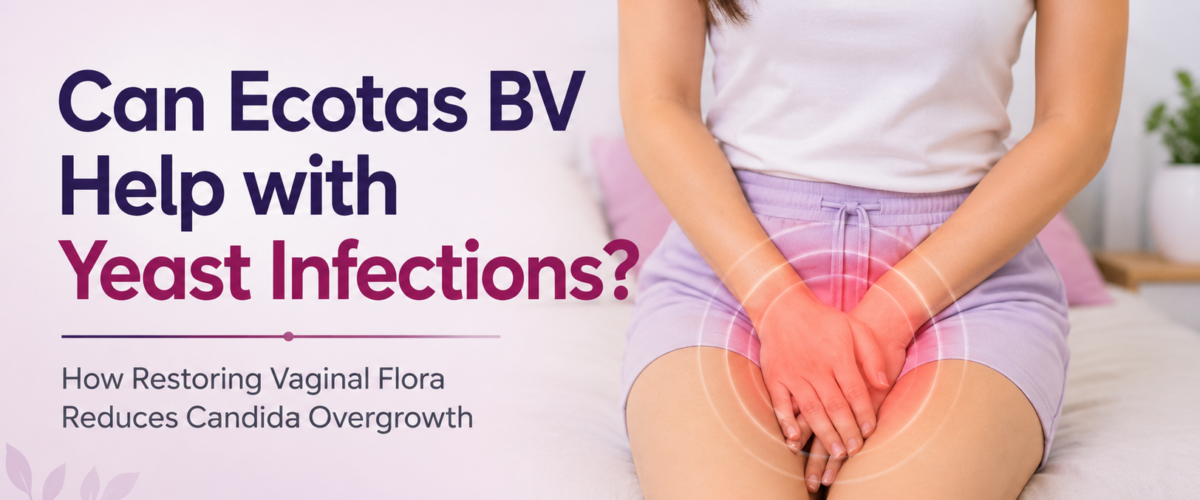
If you have ever had a vaginal yeast infection, the itching, the thick discharge, the burning you know how disruptive it is. And if you have had more than one, you have almost certainly asked: why does this keep happening, and is there something I can do beyond antifungal cream?
The answer starts in your vaginal microbiome. Yeast infections are not simply a Candida problem, they are a balance problem. And that is exactly where probiotics for yeast infection support have their most meaningful role.
This post explains the science behind how Candida overgrowth happens, what the clinical evidence actually shows about probiotics for yeast infections, and how the daily capsule for vaginal health in Ecotas BV supports the microbiome conditions that keep Candida in check.
Why Yeast Infections Keep Happening: The Microbiome Connection
Candida albicans is not an invader that enters from outside; it is a natural resident of the vaginal environment in small amounts. Up to 20% of healthy women carry Candida in their vagina without any symptoms whatsoever. The difference between a symptom-free carrier and someone in the middle of an acute yeast infection comes down to one thing: what else is living there.
A healthy vaginal microbiome typically has a rich population of Lactobacillus bacteria especially L. crispatus which help maintain an acidic pH and preserve the vagina’s naturally protective environment. When Lactobacillus populations are strong and dominant, Candida is kept in check. The acid environment suppresses fungal growth, the competitive presence of Lactobacillus blocks Candida from adhering to vaginal walls, and the immune signals produced by healthy vaginal flora actively limit fungal overgrowth.
When Lactobacillus populations drop through antibiotic use, hormonal changes, high sugar intake, stress, or immune suppression the vaginal pH rises, the competitive suppression lifts, and Candida seizes the opportunity to overgrow. The result is the familiar constellation of symptoms: intense itching, swelling, white discharge, and burning.
Yeast infections affect approximately 75% of reproductive-age women at least once, with recurrences common around 50% of women with vulvovaginal candidiasis have two or more episodes. For the women caught in that recurrent pattern, treating each episode with antifungals without addressing the underlying microbiome vulnerability is a cycle, not a solution.
How Probiotics for Yeast Infections Work
Probiotics for yeast infection management are not antifungals. They do not kill Candida directly the way fluconazole or clotrimazole does. Their role is fundamentally different and complementary.
A number of well-controlled studies indicate that probiotics, particularly lactobacilli, suppress Candida growth and biofilm development. Clinical trials have shown beneficial effects of probiotics in reducing vaginal colonisation by Candida, alleviating clinical signs and symptoms, and in some cases reducing the incidence of fungal infection.
The specific mechanisms through which a good probiotic for yeast infection prevention works include:
1. Lactic Acid Production Reduces Vaginal pH
The Lactobacilli bacteria produce lactic acid, which reduces the pH of vagina down to the range of 3.8 – 4.5. The yeast C. albicans is unable to sustain its development and reproduction in the invasive state, which causes discomfort. Thus, the Lactobacillus predominance can be achieved by using supplements daily.
2. Competitive Exclusion From Adhesion Sites
Candida must physically adhere to the vaginal epithelium to cause infection. Lactobacillus strains particularly L. rhamnosus and L. gasseri compete directly with Candida for those adhesion sites. When Lactobacillus occupies the epithelial surface, Candida cannot bind, proliferate, or form the biofilm structures that make yeast infections so persistent and recurrent.
3. Anti-Candida Compounds
Certain Lactobacillus species isolated from the vagina produce compounds like bacteriocins, hydrogen peroxide, and biosurfactants which are antagonistic towards Candida. The strains L. rhamnosus and L. gasseri have been used in clinical tests to treat BV and recurring vaginal candidiasis, after antifungal therapy, with a higher chance of complete cure compared to using antifungals alone.
4. Modulation of Vaginal Immune Responses
Based on research, probiotics’ mechanisms of action against vaginal candidiasis include the ability to interfere with the expression of some virulence traits of Candida albicans in the vaginal cavity and to suppress the host inflammatory response mediated by the influx of neutrophils caused by the fungus into the vagina. In plain terms: the right probiotic strains not only create an unfavourable environment for Candida they also dampen the inflammatory cascade that makes yeast infection symptoms so acutely uncomfortable.
What the Clinical Evidence Actually Shows
It is important to be honest about where the evidence for probiotics for yeast infections currently stands because the picture is genuinely nuanced.
Despite numerous research studies, probiotics are not yet established as a standalone treatment for active vulvovaginal candidiasis. Antifungal drugs continue to be the gold standard due to the fact that they directly attack the Candida cells.
The most solid evidence is present in two concrete situations:
As an adjunct to antifungal treatment: When taken alongside or immediately after antifungal therapy, Lactobacillus probiotics help restore the vaginal microbiome that antifungals cannot rebuild on their own. This dual approach eliminates the overgrowth and restoring the protective flora produces better long-term outcomes than antifungals alone.
As a preventative daily supplement: Recent systematic reviews and meta-analyses have confirmed the potential benefits of probiotics in managing vaginal dysbiosis, including reductions in infection recurrence rate and improvements in clinical outcomes. A reduction in the proportion or abundance of lactobacilli is strongly associated with vulvovaginal candidiasis, making restoration of Lactobacillus populations the logical preventative strategy.
Prebiotics such as oligosaccharides have also garnered interest as potential adjuncts to probiotics in the management of vaginal infections including yeast infections compounds that selectively stimulate the growth of beneficial lactobacilli while inhibiting the proliferation of Candida species. This is precisely the rationale behind combining Lactobacillus probiotics with fructo-oligosaccharides (FOS) prebiotic as Ecotas BV does in a synbiotic formulation.
Which Probiotic Strains Are the Best for Yeast Infections?
Not all probiotics for yeast infection support are formulated equally. The strains with the strongest evidence for anti-Candida activity in the vaginal environment are:
- Lactobacillus gasseri: – produces biosurfactants that block Candida adhesion to vaginal epithelial cells; demonstrated anti-Candida activity greater than 90% against Candida albicans in published research
- Lactobacillus rhamnosus: – inhibits Candida biofilm formation, competes for adhesion sites, and reduces vaginal Candida colonisation in randomised trials
- Lactobacillus crispatus: – the dominant species in the healthiest vaginal microbiome; its dual lactic acid and hydrogen peroxide production suppresses both Candida and BV-associated bacteria simultaneously
- Lactobacillus jensenii: – contributes to the stable, acidic multi-species community that makes Candida overgrowth structurally harder to establish
A good probiotic for yeast infection prevention is one that includes multiple vaginal-specific strains targeting different aspects of Candida suppression, not a single generic Lactobacillus acidophilus formulated for gut health and repurposed as a vaginal supplement.
Practical Tips: Getting the Most From Probiotics for Yeast Infection Prevention
If you experience recurrent yeast infections, these evidence-informed steps can help when combined with daily probiotic support:
- Start a daily synbiotic capsule for vaginal health during and after antifungal treatment: – antifungals clear Candida but do not rebuild Lactobacillus. Starting a probiotic during treatment, spaced a couple of hours apart, helps restore protective flora as the infection clears
- Continue consistently for at least 8 weeks: – Lactobacillus colonisation is a gradual process. Short-term use produces limited long-term protection
- Reduce dietary sugar and refined carbohydrates: – Candida thrives on glucose. A lower-sugar diet directly reduces the fuel available for yeast overgrowth in the vaginal environment
- Wear breathable underwear and avoid tight synthetic clothing: – moisture and heat favour Candida proliferation
- Use probiotics after every course of antibiotics: – antibiotics are one of the strongest triggers for post-antibiotic yeast infections. A synbiotic started during an antibiotic course can significantly reduce this risk
How Ecotas BV Supports Vaginal Flora Against Candida
Ecotas BV for vaginal health is designed as a comprehensive daily synbiotic and every component has a role in the anti-Candida defence strategy.
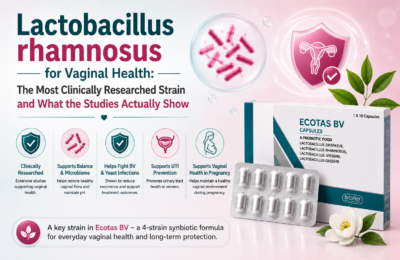
The four Lactobacillus strains in the Ecotas BV capsule for vaginal health each contribute:
- L. crispatus restores the gold-standard, pH-lowering protective microbiome that Candida finds most hostile
- L. rhamnosus inhibits Candida adhesion and biofilm formation through competitive exclusion and immune modulation
- L. gasseri produces biosurfactants and bacteriocins with documented anti-Candida activity exceeding 90% against C. albicans
- L. jensenii reinforces the stable, native multi-species barrier that structurally prevents Candida overgrowth
The fructo-oligosaccharides (FOS) prebiotic in the formula selectively feeds all four strains improving their survival through digestion and colonisation efficiency while also independently stimulating antimicrobial immune peptides in the vaginal tract that contribute to Candida suppression.
Whether you are recovering from a recent yeast infection, trying to break a recurring pattern, or simply maintaining the protective vaginal flora that keeps Candida in check daily, Ecotas BV for vaginal health provides the multi-strain, prebiotic-supported foundation that a good probiotic for yeast infection prevention requires.
The Bottom Line
Yeast infections are not just a Candida problem they are a vaginal microbiome imbalance. When Lactobacillus populations are strong, Candida is suppressed. When they fall, Candida takes over. Probiotics for yeast infections do not replace antifungal treatment but they address the underlying vulnerability that antifungals cannot fix alone.
A good probiotic for yeast infection prevention is a multi-strain, prebiotic-supported daily synbiotic with clinically validated vaginal Lactobacillus strains exactly what Ecotas BV for vaginal health is built to deliver. Every day.
Frequently Asked Questions
– Can probiotics treat an active yeast infection?
Probiotics for yeast infections are not a replacement for antifungal treatment during an active episode. Antifungal medications (oral fluconazole or topical clotrimazole/miconazole) remain the most effective way to clear an active Candida overgrowth quickly. The use of probiotics is most effective as a support in the treatment process to help rebuild the protective vaginal flora and as a preventive supplement to help avoid recurrence.
– Which probiotic is the best for preventing yeast infections?
The most suitable probiotic in the prevention of yeast infection should include Lactobacilli strains with clinical proof to be antagonistic to Candida yeast. The most effective ones are L. gasseri, L. rhamnosus, and L. crispatus. The combination of these strains together with a prebiotic (FOS) in a synbiotic formulation makes the product even more efficient than probiotic alone. Ecotas BV includes all four key vaginal Lactobacillus strains plus FOS in a daily capsule for vaginal health.
– How long does it take for probiotics to help with yeast infections?
For adjunct use alongside antifungal treatment, improvements in the vaginal microbiome begin within days. For long-term prevention of recurrent yeast infections through daily probiotic use, most women notice meaningful reduction in recurrence frequency after four to eight weeks of consistent daily supplementation. The key word is consistent sporadic use produces far less benefit than a reliable daily routine.
– Can I take Ecotas BV while taking antifungal medication?
Yes. Ecotas BV’s probiotic strains are unaffected by antifungal medications (antifungals target fungi, not bacteria). Taking Ecotas BV daily during and after antifungal treatment helps your protective vaginal Lactobacillus populations rebuild more effectively once the Candida overgrowth is cleared. This dual approach to treat the infection and restore the flora is where the strongest combined outcomes are seen.
– Why do I keep getting yeast infections even after treatment?
Recurrent yeast infections are almost always a microbiome vulnerability issue rather than an antifungal resistance issue. In contrast to BV, yeast infection is characterised by a white discharge with the consistency of cottage cheese, no vaginal odour, and redness and inflammation of the vulva with recurrences common among 50% of affected women. If antifungals clear the infection but the Lactobacillus microbiome does not rebuild adequately, Candida re-establishes quickly. A daily synbiotic capsule for vaginal health addresses this root cause directly.